Insights / Sales playbooks
The trade show follow up playbook for industrial sales
The booth was busy and the badge scanner is full. Here is a practical plan for turning a stack of scans into real conversations before the leads go cold.

Trade shows are still one of the best places to meet buyers in manufacturing. Engineers and purchasing managers walk the floor looking for suppliers, and a good booth conversation can start a relationship that lasts for years.
The problem is what happens after. The team flies home with hundreds of badge scans, a few business cards and a handful of scribbled notes. Then the backlog that piled up during the show takes over, and the follow up slides a week, then two. By the time the emails go out, most of those conversations have been forgotten on both sides.
This playbook is about closing that gap. None of it is complicated. It just has to be planned before the show, not after.
Before the show: decide what happens to every lead
Most follow up fails because nobody decided in advance who owns it and what it says. Settle these before you leave:
- Owner and deadline. Who follows up with which leads, and by when. "Within two business days" is a good working target for warm leads.
- Lead tiers. Agree on simple definitions so the booth team can tag leads on the spot. For example: hot (a live project or RFQ), warm (a real fit, no timeline yet) and nurture (interested, early or unclear).
- Templates written in advance. Draft the follow ups for each tier now, while you have time to make them good.
- Where the notes go. The badge scan captures a name and a company. It does not capture the conversation. Decide how the booth team records what was said.
At the booth: capture the conversation, not just the badge
A badge scan is a contact. The conversation is the lead. The single most valuable habit at a show is capturing a line or two right after each good conversation:
- What they make and what they asked about
- Any project, quantity or timeline mentioned
- Who else is involved in the decision
- What you promised to send
Typing that into an app between conversations rarely happens. Speaking it does. A quick voice note in the aisle, "Ana at Orion, defense brackets, 2,000 a year, wants our AS9100 cert and a sample, decision with their quality lead", is worth more than the scan itself.
The first 48 hours after: sort, clean and send
When you get back, resist the temptation to blast everyone with the same email. Work in this order:
- Clean the list. Merge the scanner export with business cards and notes. Remove duplicates, and match people against your CRM so existing customers do not get a "nice to meet you" email.
- Sort by tier. Hot leads get a personal email or a call first. Warm and nurture leads go into a short sequence.
- Make the first touch specific. Reference the actual conversation: the part, the problem, the thing you promised to send. Generic "thanks for stopping by" emails are easy to ignore.
- Send what you promised. If you said you would send a spec sheet or a certification, send it in the first email, not a later one.
A simple sequence for warm and nurture leads
Keep it short and useful. Three touches over about two weeks works well for most industrial audiences:
- Day 0: the recap. Good to meet you, here is what we talked about, here is the spec sheet or capability deck you asked for.
- Day 4 or 5: something useful. A short case study from a similar customer, or an answer to a question that came up at the booth.
- Day 10 to 14: a direct ask. Is there a project this could help with this quarter? Offer a short call and make it easy to book.
Stop the sequence for anyone who replies, and move that conversation to a person immediately. Nothing ends a promising lead faster than an automated reminder sent after they already answered.
Stay compliant
Commercial email in the United States is covered by the CAN-SPAM Act. Among other requirements, every message needs an accurate sender, a working way to opt out, and your physical postal address. Opt-out requests must be honored promptly, within ten business days. If you sell internationally, check the rules for those countries too, as some are stricter about consent.
Measure what matters
After the show, track a few numbers so the next one is better:
- Time from show close to first follow up
- Reply rate by tier
- Meetings booked, and opportunities created within 90 days
- Revenue influenced over the following year (shows are a long game in manufacturing)
How OTIS helps
This is exactly the kind of work an AI agent is good at, and the kind people struggle to fit in after a show. With InnateIQ:
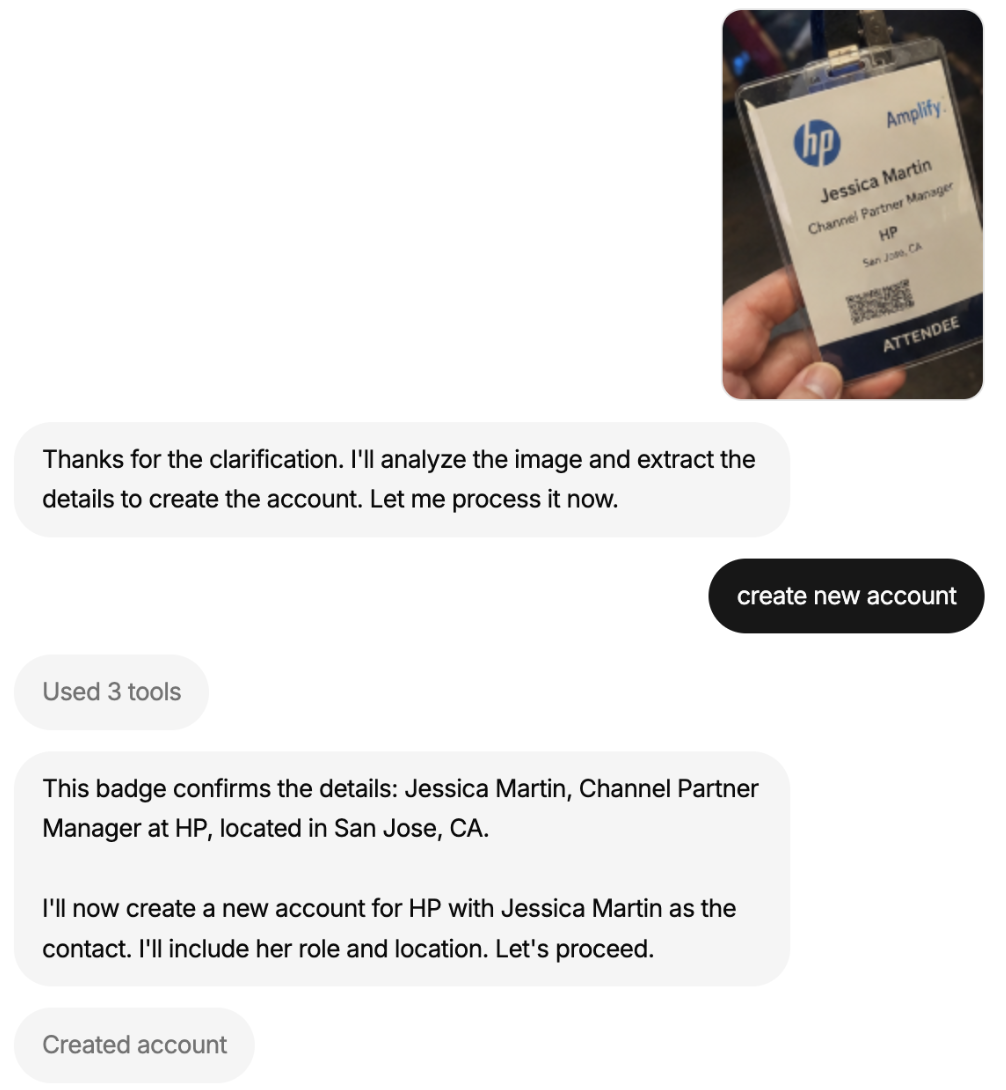
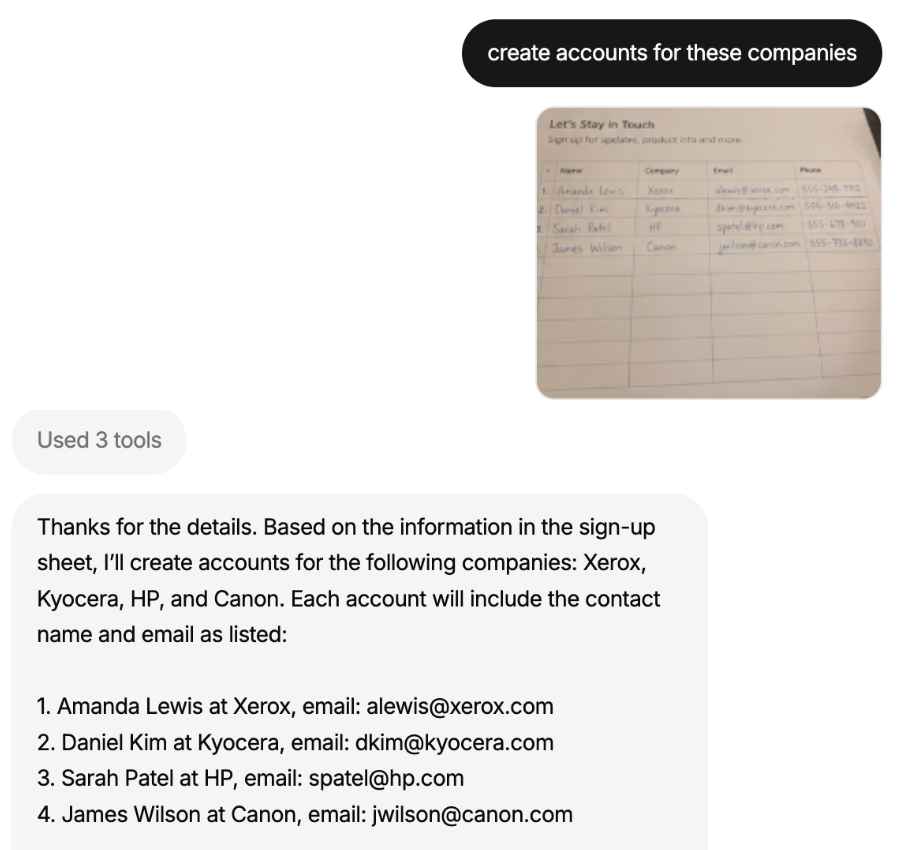
- Snap a photo of a badge, a business card or a sign-up sheet and OTIS reads it and creates the accounts and contacts for you.
- Drop the scanner export in and OTIS maps the columns, merges duplicates and matches people against your existing records.
- Speak your booth notes and OTIS attaches them to the right contacts.
- Ask for a campaign in one sentence, "a three email nurture for the aerospace leads from Detroit", and OTIS writes it and picks the timing. You approve it before anything is sent, and replies pause the sequence automatically.
Here is what the first one looks like in practice. A rep photographs a badge between conversations:
The same works for a paper sign-up sheet from the booth, with four new accounts from one photo:
See it in action on our how it works page.
The short version: decide owners, tiers and templates before the show, capture the conversation and not just the badge, follow up specifically within two business days, and keep the sequence short. The leads you worked hard to meet deserve better than a generic email two weeks later.